
Storytelling and the art of creating a sense of place in Hospitality design
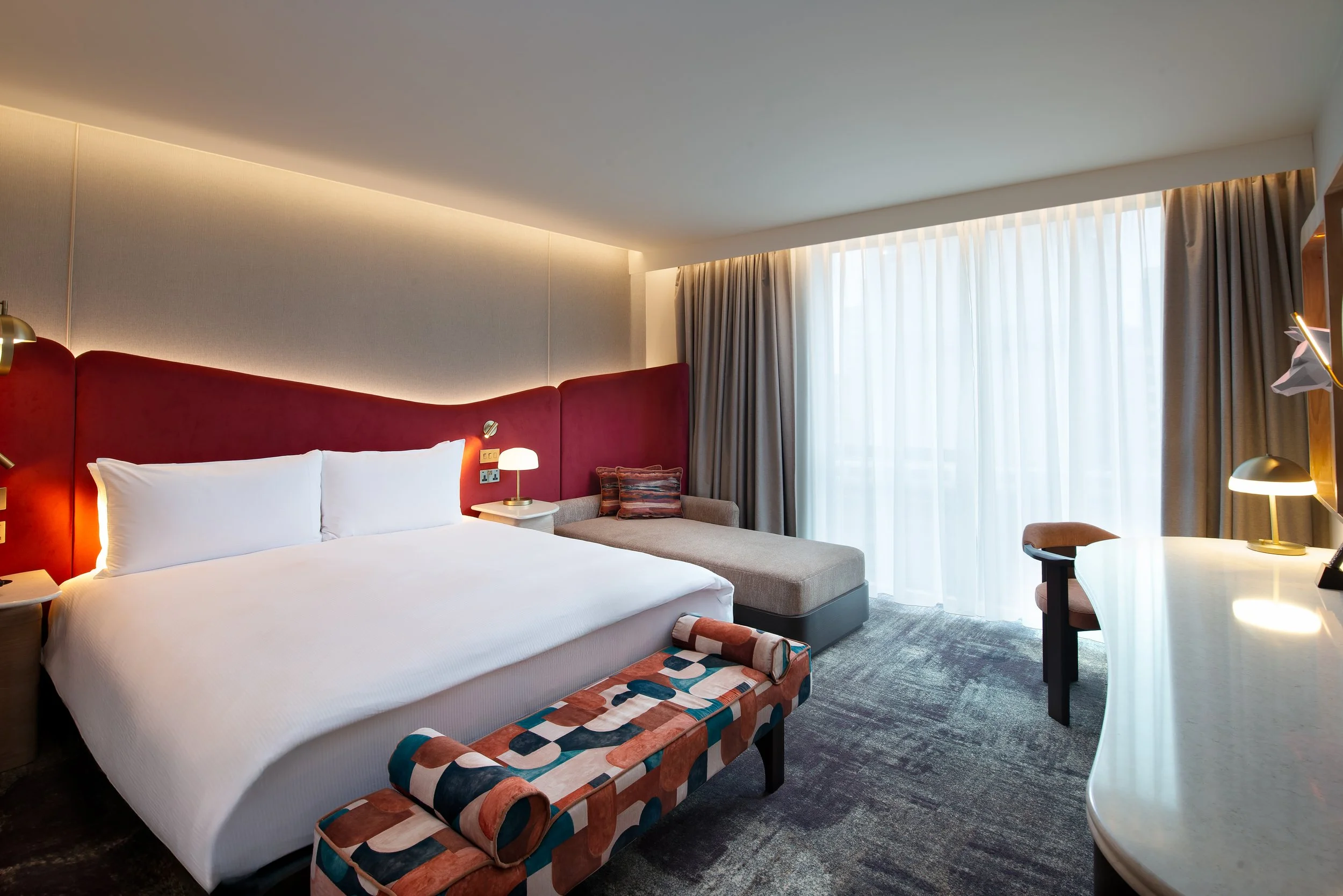
Guestrooms at Hilton London Bankside draw inspiration from the area's creative culture, with sculptural forms, curated artwork and locally influenced design details.
Every hotel has a location. The most memorable hotels have a story.
As hospitality design continues to evolve, guests increasingly expect more than comfort, convenience and functionality. They want experiences that feel authentic, connected to their surroundings and reflective of the places they are visiting.
This growing focus on experience has made storytelling an increasingly important part of hospitality design. When done well, it helps create spaces with a clear sense of identity, shaping how guests connect with a hotel and the wider destination beyond its doors.
This approach is explored in the latest issue of Sleeper Magazine through Hilton London Bankside, a project designed by SpaceInvader that draws inspiration from one of London's most creative and culturally rich neighbourhoods.
Located on the south bank of the River Thames, Bankside has long been associated with creativity, theatre, art and independent thinking. Home to cultural institutions including Shakespeare's Globe and Tate Modern, the area has a distinctive character that continues to influence its streets, businesses and public spaces.
For the Hilton London Bankside expansion, SpaceInvader looked to this local context as the foundation for the design narrative.
"We always look at the area and local context, which led us down three unique concept threads: the cultural, the creative and the connected," explained Senior Interior Designer Shreena Patel in Sleeper Magazine.
These themes informed the design of the hotel's new guestrooms and suites, influencing everything from colour palettes and artwork to furniture forms, detailing and material selections.
Rather than applying a generic design language, the interiors were developed to reflect the energy and character of Bankside itself. References to the area's galleries, theatres and creative communities appear throughout the guest experience, creating a stronger connection between the hotel and its surroundings.
One of the clearest examples is the sculptural headboard, which serves as a focal point within the guestrooms.
"The headboard serves as the focal point," Shreena explained. "When a guest walks in, they see the headboard first. It's when they turn a corner that they find the art, and the room becomes a gallery."
This layered approach to storytelling allows guests to discover details gradually, creating moments of surprise and curiosity rather than presenting a concept all at once.
Artwork also plays a significant role in shaping the experience. Curated pieces, inspired by Tate Modern and local creative culture, contribute to a gallery-like atmosphere while helping establish a stronger sense of place.
Associate Director Imogen Woodage described the ambition as creating environments that bring people into the design itself.
"We wanted to bring people into the design, whether through cut-outs in the corridors or miniature sculptures on LED-lit shelves. It's about creating that personal element."
For hospitality designers, this illustrates an important shift. Storytelling is no longer confined to branding, graphics or guest communications. It is increasingly embedded within the physical environment itself through materials, artwork, form, texture and spatial experience.
When thoughtfully integrated, these elements help create memorable spaces that feel distinctive and authentic. They also provide an opportunity for hotels to celebrate the culture, history and character of their location, offering guests an experience that could not be replicated elsewhere.
As competition within the hospitality sector continues to grow, creating a strong sense of place is becoming increasingly important. Hotels that successfully connect with their surroundings are often able to create deeper emotional connections with guests, resulting in richer and more memorable experiences.
Hilton London Bankside demonstrates how storytelling can move beyond narrative alone to become a tangible part of the guest journey, helping shape spaces that feel rooted in context, culture and community.
The project was recently featured in Sleeper Magazine, with insights from SpaceInvader's Imogen Woodage and Shreena Patel.
Read the full Sleeper feature here →