
Why biophilic design is about more than plants
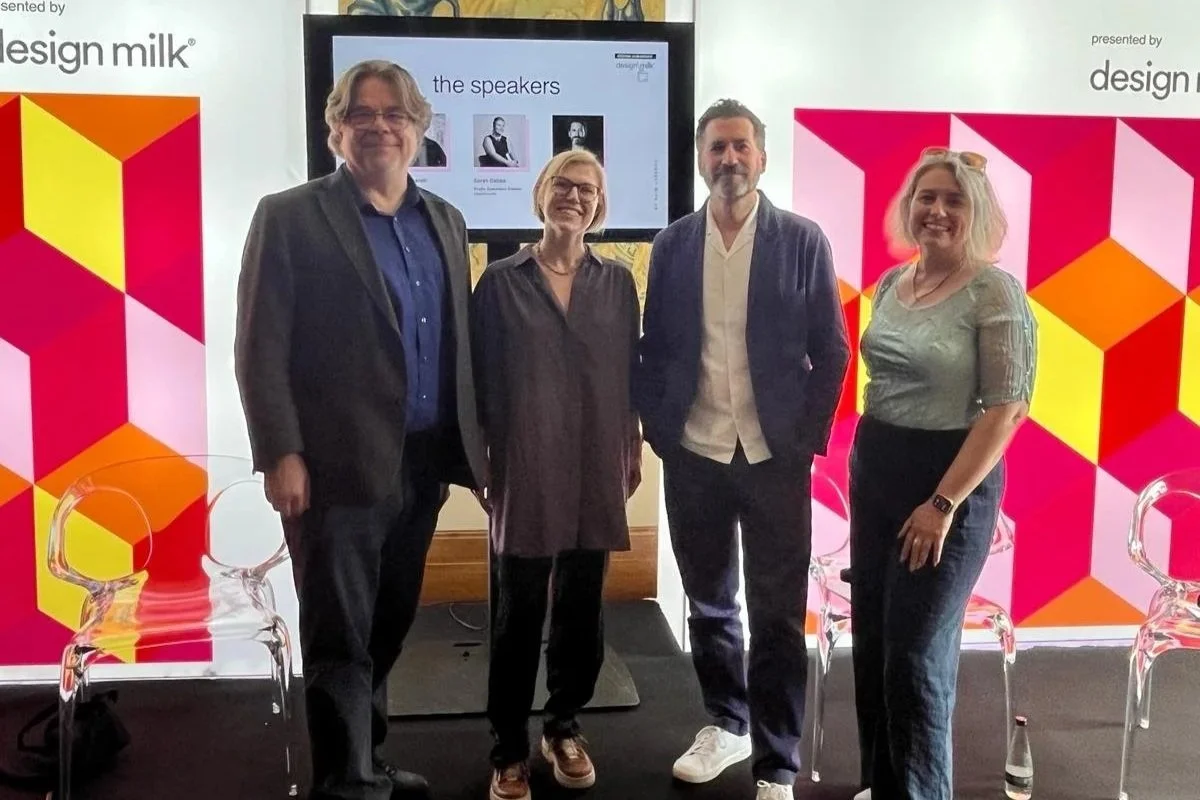
Sarah Dabbs of SpaceInvader with fellow panel speakers at Design Dialogues by Design Milk during Clerkenwell Design Week 2026.
Biophilic design was a recurring theme throughout Clerkenwell Design Week 2026, reflecting a growing industry focus on wellbeing, environmental responsibility and the relationship between people and place.
As part of Design Dialogues by Design Milk, SpaceInvader's Studio Operations Director, Sarah Dabbs, joined Oliver Heath of Oliver Heath Design Studio and John Bushell of KPF for a discussion exploring how nature-integrated design is evolving beyond aesthetics towards measurable outcomes for both people and the environment.
The fully booked session, hosted by Hannah Rose Feniak of Architizer, examined how designers are increasingly considering biodiversity, environmental quality, neurodiversity and long-term wellbeing as part of a broader approach to creating healthier, more resilient spaces.
For many years, biophilic design has often been associated with planting schemes, green walls and visual references to nature. While these elements remain important, the discussion highlighted how the industry is now taking a much broader view of what nature-integrated design can achieve.
"Biophilic design is so much more than simply adding plants," explains Sarah. "It encompasses wellbeing, neurodiversity, sustainability, materiality and environmental quality. It's about understanding how people experience a space and creating environments that genuinely support them."
This shift reflects a growing body of research exploring the impact of the built environment on human health, behaviour and cognitive performance. Factors such as natural light, air quality, acoustics, sensory experience and material selection can all influence how people feel, focus, collaborate and recover within a space.
As a result, biophilic design is becoming increasingly evidence-led. Rather than focusing solely on visual connections to nature, designers are exploring how environments can actively contribute to wellbeing, productivity and inclusion.
The conversation also explored the relationship between biophilic design and neurodiversity. As organisations place greater emphasis on creating inclusive environments, there is growing recognition that spaces should support a wider range of sensory, cognitive and emotional needs.
This is particularly relevant across workplace, hospitality and civic environments, where spaces are expected to serve increasingly diverse user groups while remaining adaptable, sustainable and commercially effective.
Alongside discussions around wellbeing, the panel also examined the environmental responsibilities associated with nature-integrated design. For Sarah, this is where biophilic principles intersect with wider conversations around sustainability and low-impact interiors.
At SpaceInvader, the approach to nature-integrated design extends beyond introducing natural elements into a space. It also considers how materials are sourced, specified, reused and repurposed throughout a project's lifecycle. Reuse, repair and waste reduction all form part of creating environments that support both people and the planet.
As expectations around sustainability, wellbeing and inclusivity continue to evolve, nature-integrated design is becoming an increasingly valuable tool for creating spaces that perform on multiple levels. The focus is shifting from what nature looks like within a space to how it helps that space function, environmentally, socially and experientially.
For designers, clients and occupiers alike, the challenge is no longer whether nature should play a role within the built environment. The more important question is how its benefits can be embedded in meaningful, measurable and lasting ways.
Sarah Dabbs participated in Beyond Biophilia: The Next Phase of Nature-Integrated Design as part of Design Dialogues by Design Milk during Clerkenwell Design Week 2026.