
Three BCO Shortlisted Projects Shaping Workplace Design
As the BCO Northern Awards approach, we’ve been reflecting on the three SpaceInvader projects shortlisted this year.
They’re very different in scale, sector and brief. But taken together, they show how workplace design is shifting, towards reuse, towards real patterns of work, and towards spaces that are shaped around people.
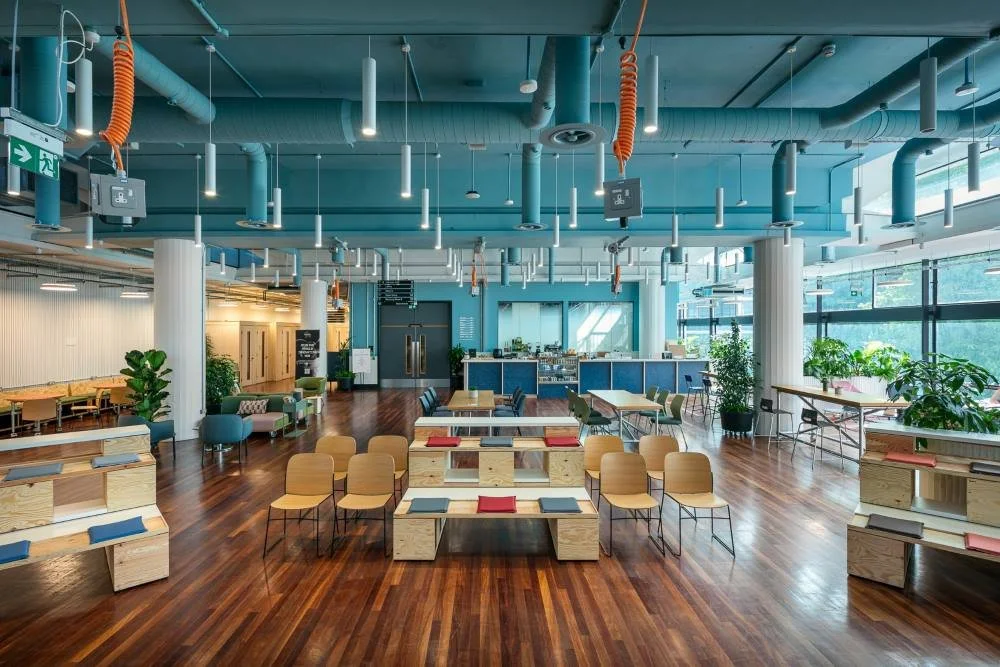
Tiered seating within the Renold Building, designed to support informal working and shared use.
At the Renold Building in Sister Manchester, the starting point wasn’t a blank canvas. It was a 1960s university building, reworked into a multi-tenant innovation hub using a circular-first approach that retained and repurposed over 95% of existing furniture, fittings and materials.
That decision didn’t just reduce impact. It changed how the building works. Instead of designing for a single occupier, the building is structured to support multiple uses over time, with coworking, private suites, events and public-facing spaces layered together to adapt as the wider district evolves.
Reuse here isn’t just about sustainability. It’s about flexibility, longevity and making buildings work harder over time.
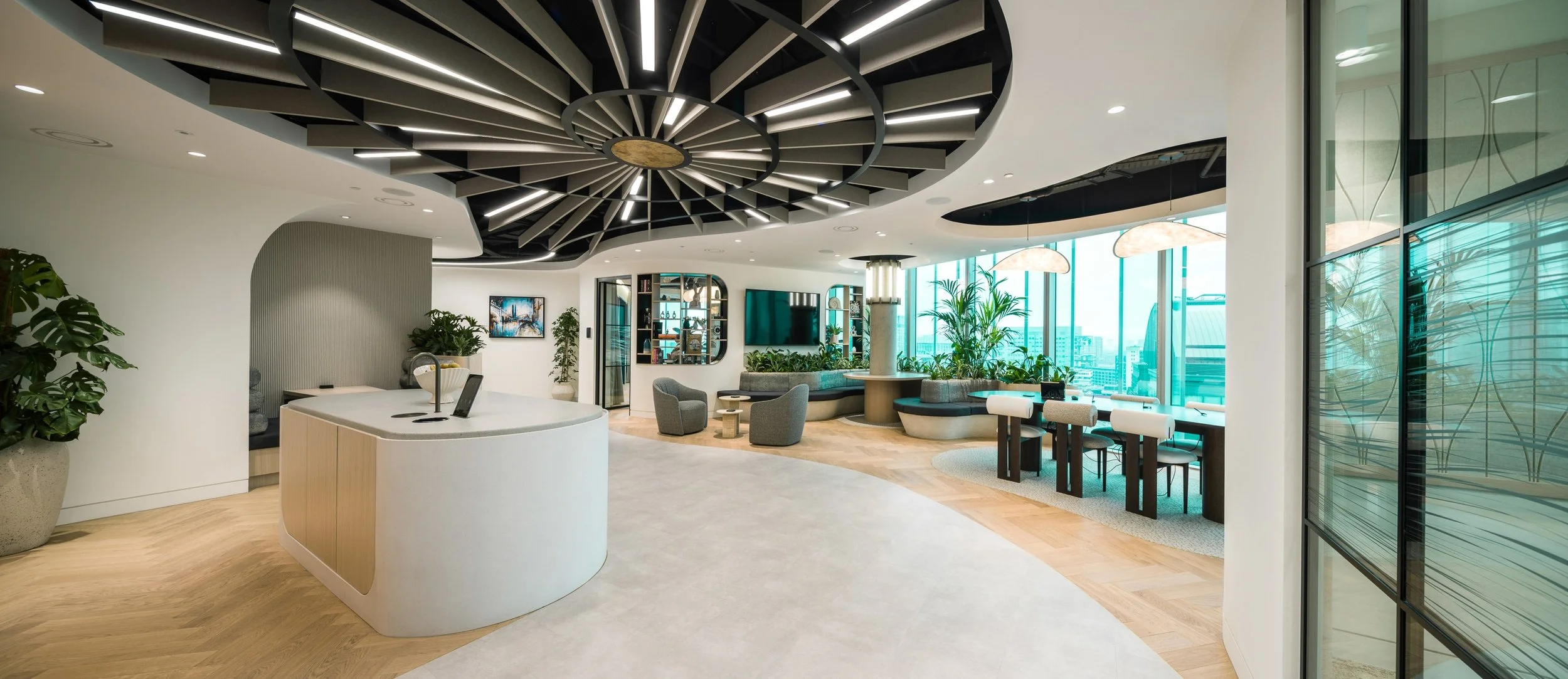
Reception and breakout space at Overbury, Chancery Place, Manchester
At Chancery Place, the question was different. What does a workplace need to do today? For Overbury, their Manchester office needed to support project delivery, welcome clients, and reflect the standard they deliver, all within a compact floorplate.
The response wasn’t a single open plan. Instead, the layout is organised as a series of connected settings, allowing different types of work to sit alongside each other, from focused tasks through to more collaborative, client-facing moments. Each space has a clear role.
A retrofit-first approach retained over 60% of existing elements, supported by low carbon materials and a strategy aligned to SKA and WELL principles. The result is a workplace that doesn’t just accommodate the business. It reflects how it operates.
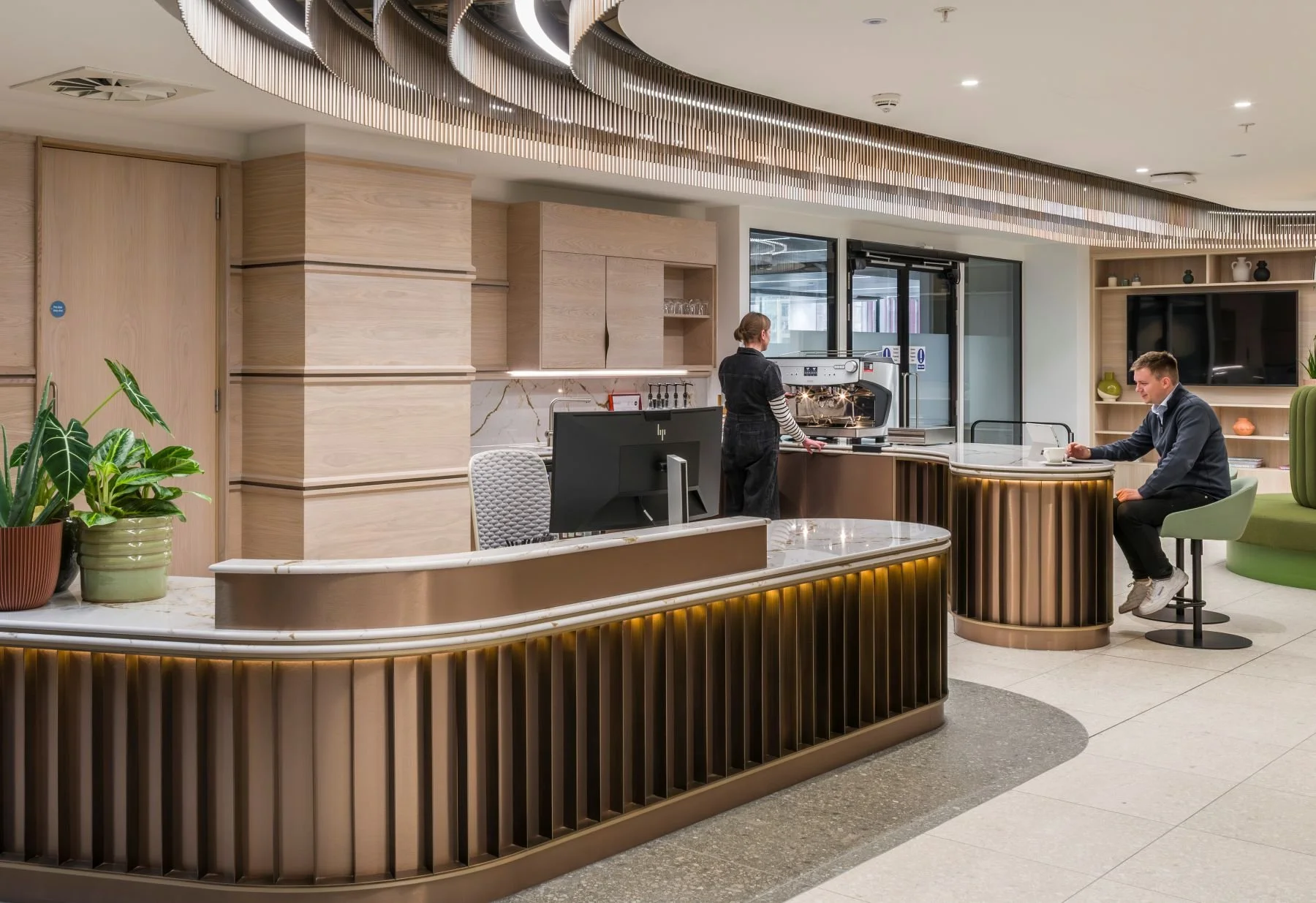
Reception and coffee point at No.1 St Michael’s, bringing a more informal, hospitality-led feel to the workplace.
At No.1 St Michael’s, the focus shifts again. Here, the starting point was how a workplace supports the people using it.
For a multinational legal firm relocating after 15 years in their previous office, the move offered an opportunity to rethink how day-to-day work is supported. The layout balances open working with a greater provision of enclosed rooms, responding to the need for focus, acoustic privacy and choice across the day.
Each setting has a clear role. Inclusion and wellbeing are embedded from the outset, with spaces designed to support a wider range of needs, from multi-faith and contemplation rooms to returning parent facilities, alongside shared social areas and a terrace.
In a workplace like this, the ability to focus comes down to how the environment is planned and used. That approach extends beyond the workplace itself, with over £3.1 million of independently verified social value delivered through the project.
Taken together, these projects point to a broader shift. Workplaces are no longer defined by a single idea or format. They are being shaped by how they perform over time, how they support different ways of working, and how they respond to the people using them.
Reuse is influencing how buildings evolve. Design is reflecting how organisations actually operate. Performance is increasingly measured in human terms, not just efficiency. These aren’t emerging trends. They’re becoming expectations.
The BCO Awards have always been a useful marker of where the industry is heading. This year’s shortlist reflects a move towards workplaces that are more adaptable, more considered and more grounded in real use.
For us, these projects represent more than individual outcomes. They show how design can support longevity, clarity and people in equal measure.
Congratulations to everyone shortlisted this year, it’s a strong reflection of the work being delivered across the region.