

Buile Hill Mansion Salford

Location
Salford
Status
Completed 2026
Sector
Hospitality
Client
Salford City Council
A historic civic building reimagined as a hospitality-led destination for community and celebration.
Buile Hill Mansion, a Grade II-listed building set within Buile Hill Park, has been brought back into public use following an £11m transformation led by Salford City Council.
Vacant for over 25 years, the 19th-century mansion has been reimagined as a café and events venue, alongside its role as the city’s official register office, creating a destination that supports both everyday use and significant life moments. A bar element supports private functions and events.

SpaceInvader was appointed to reimagine the interiors, developing a concept that brings together civic and hospitality functions through a series of flexible, connected spaces.
The brief required the building to operate across multiple uses, from public café visitors and park users to weddings, ceremonies and community events, demanding a careful balance between accessibility, commercial viability and a high-quality hospitality experience.
The project also required careful coordination between heritage restoration, operational functionality and contemporary accessibility standards.
Spaces needed to support civic services, weddings, hospitality use and community activity simultaneously, while respecting the architectural significance of the listed building and ensuring long-term viability.

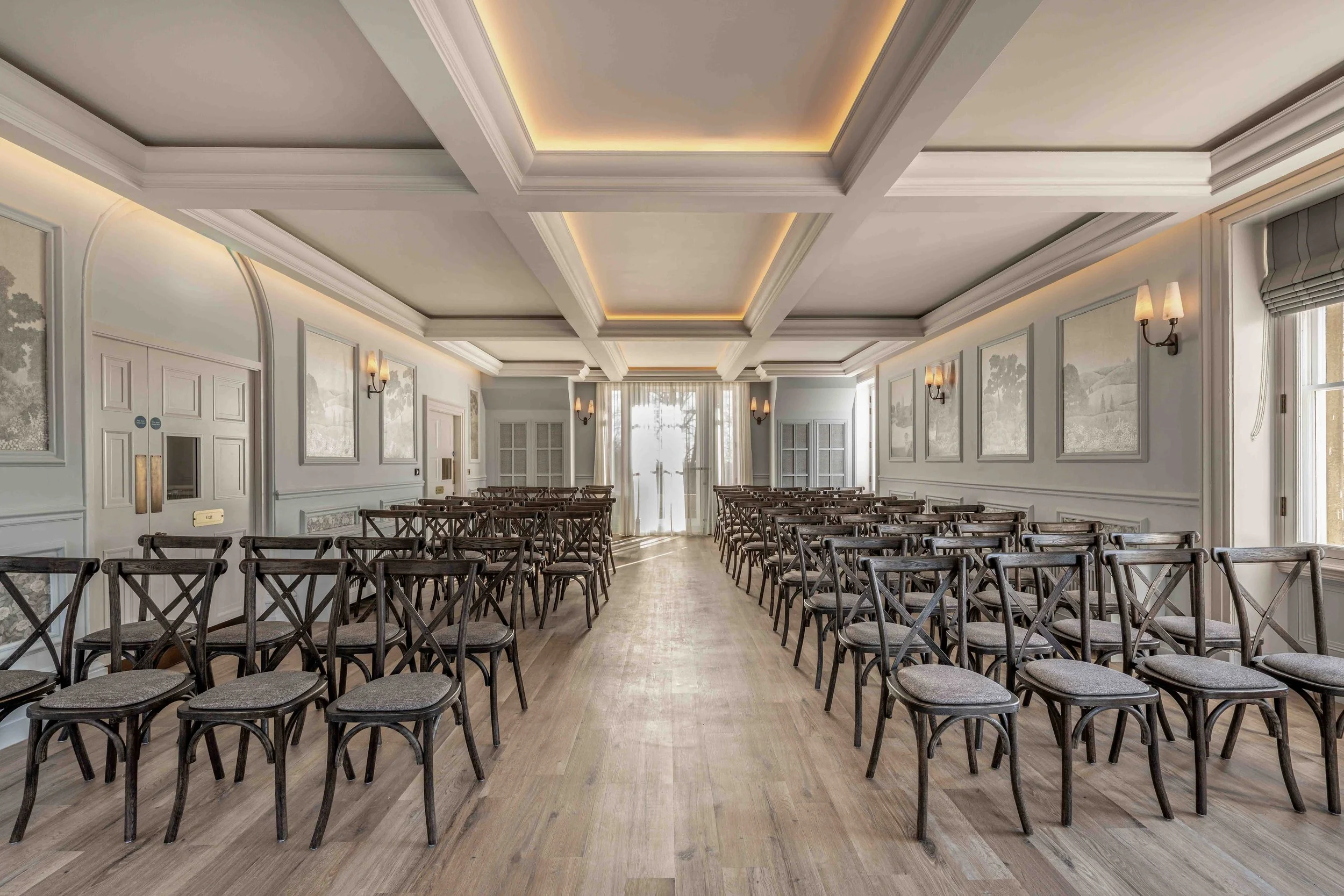
On the first floor, ceremony and function spaces are arranged as a sequence, allowing weddings and events to flow seamlessly from arrival through to celebration.
Flexibility underpins the project, enabling spaces to adapt between day and night, public and private use, and a range of event sizes.
Across the building, restored architectural features sit alongside contemporary interventions, including bespoke lighting, integrated joinery and new ceiling details designed to support both atmosphere and operational performance.

Wayfinding and signage are fully integrated into the overall approach, supporting a clear and intuitive user journey throughout the building. Graphic elements, influenced by historic patterns and the key motif, help guide visitors between civic and hospitality functions while reinforcing the project’s identity.
The design approach is rooted in unlocking the building and reintroducing it to the public. Early inspiration came from objects discovered on site, including a collection of old keys, which informed the wayfinding language and wider identity.
This idea was layered with references to The Secret Garden, long associated with the mansion, informing both the project narrative and the café’s connection to the surrounding landscape.
A third strand draws from the building’s Georgian heritage, expressed through a soft palette of greens and mauves, alongside reinstated detailing and heritage-inspired materials.
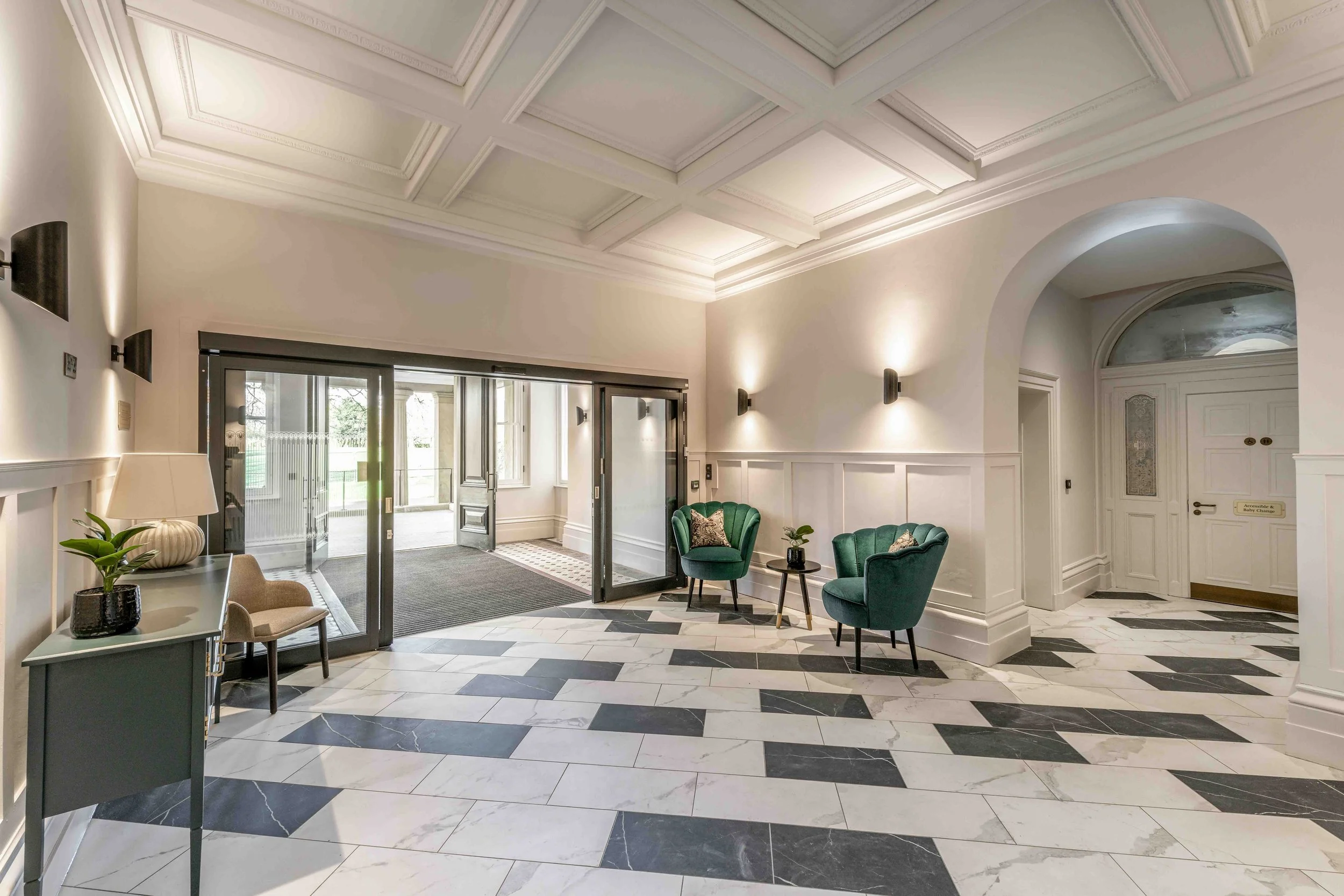
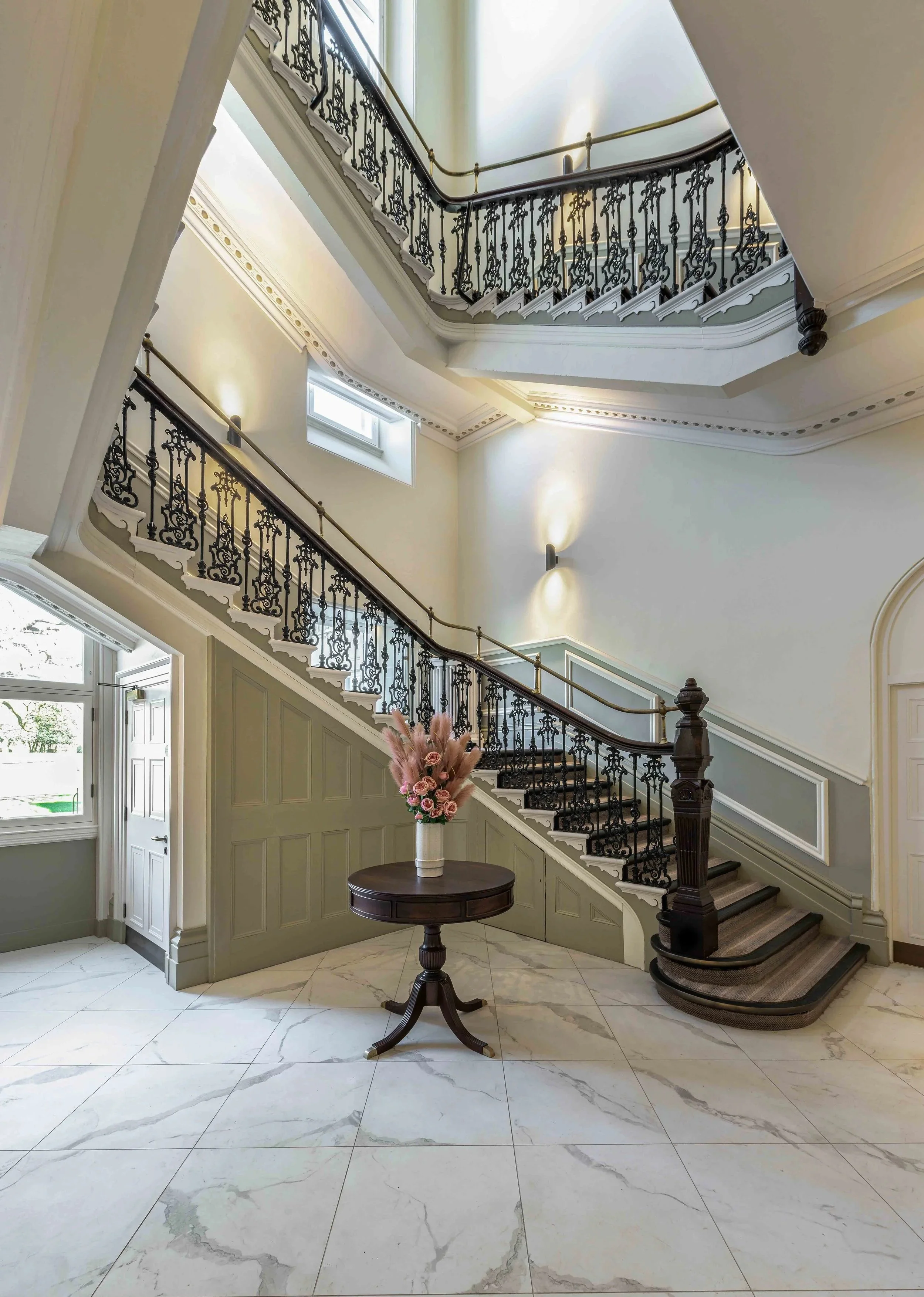
Internally, the spaces are organised around a clear and intuitive spatial journey. Visitors arrive into a central reception space, where the restored staircase provides a strong visual anchor and point of orientation. From here, movement is directed towards the upper floors, which house the register office and ceremony spaces, or towards the more informal hospitality areas at ground level.

Material choices reinforce this versatility, combining durability with a level of finish expected in hospitality environments.
A layered palette of marble-effect tiling, timber finishes and mosaic flooring references the building’s heritage, while elements such as antique mirrors, panelling and brass detailing introduce depth and character.
Softer tones and natural references connect the interiors to the surrounding park, reinforcing the relationship between inside and out.

“Giving what had become a tired local asset such a major transformation has been a real joy for the SpaceInvader and wider project teams.
Buile Hill Mansion is now a place for community and celebration; a venue people will use and visit for generations to come.”

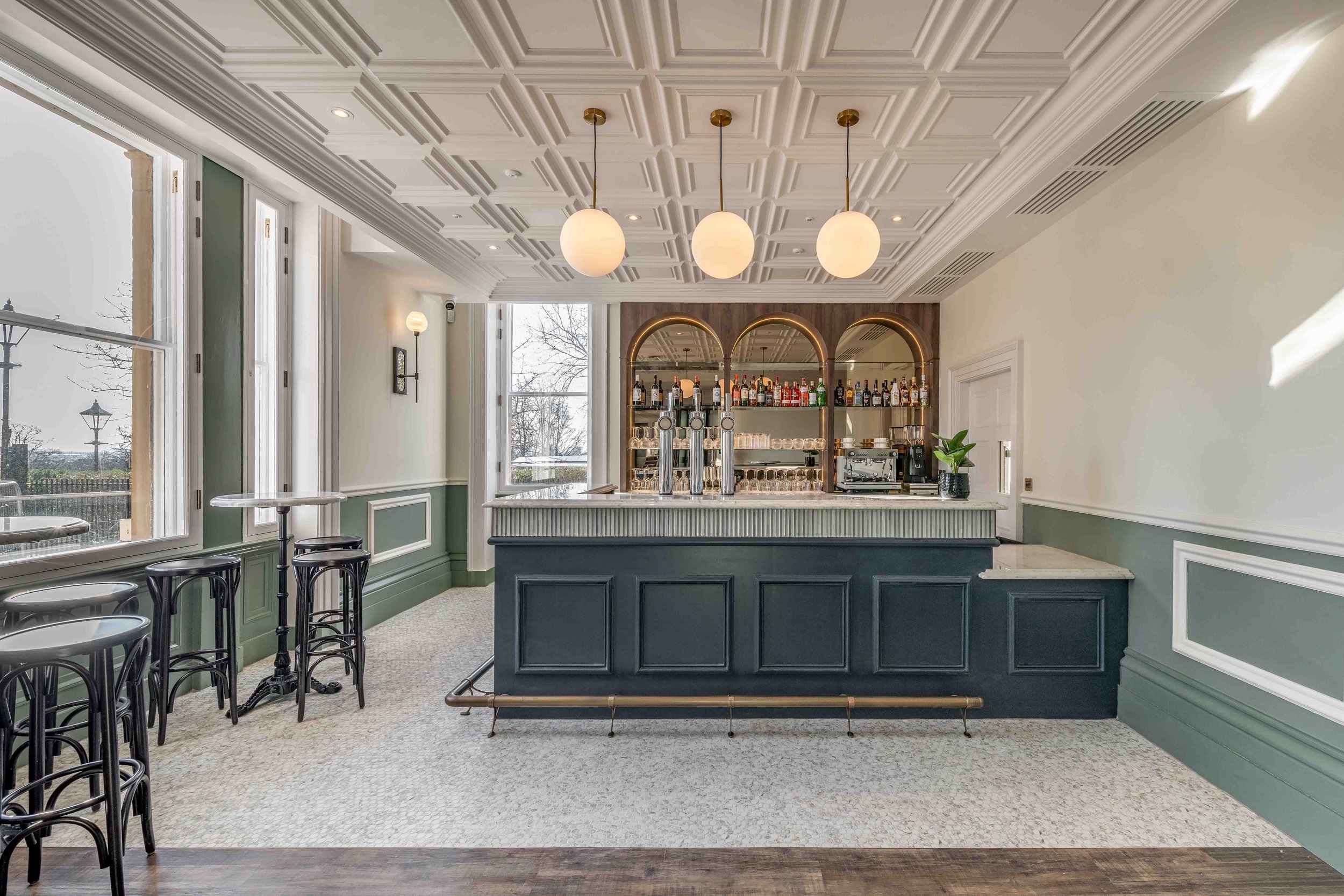
The Secret Garden Café opens onto the park, creating a relaxed, public-facing environment for daily use, while the adjoining bar introduces a richer, more atmospheric setting, designed to be activated during events and private functions.
Across the building, restored architectural features sit alongside contemporary interventions, including bespoke lighting, integrated joinery and new ceiling details designed to support both atmosphere and operational performance.
Wayfinding and signage are fully integrated into the overall approach, supporting a clear and intuitive user journey throughout the building.
Graphic elements, influenced by historic patterns and the key motif, help guide visitors between civic and hospitality functions while reinforcing the project’s identity.
Now reopened, Buile Hill Mansion once again plays an active role in the life of the city, operating as both a civic facility and hospitality destination.
The project demonstrates how heritage buildings can be reimagined for contemporary use, creating spaces that are commercially viable, socially valuable and deeply connected to their local context.
Project Team: Salford City Council I Buttress Architects I Identity Consult I Desco I John Turner Construction Group Ltd I Kepczyk Pearce Sanderson I Telegraph Furniture
Photography Credits: Franklin & Franklin