
Radical reuse in Greater Manchester and the future of town centres
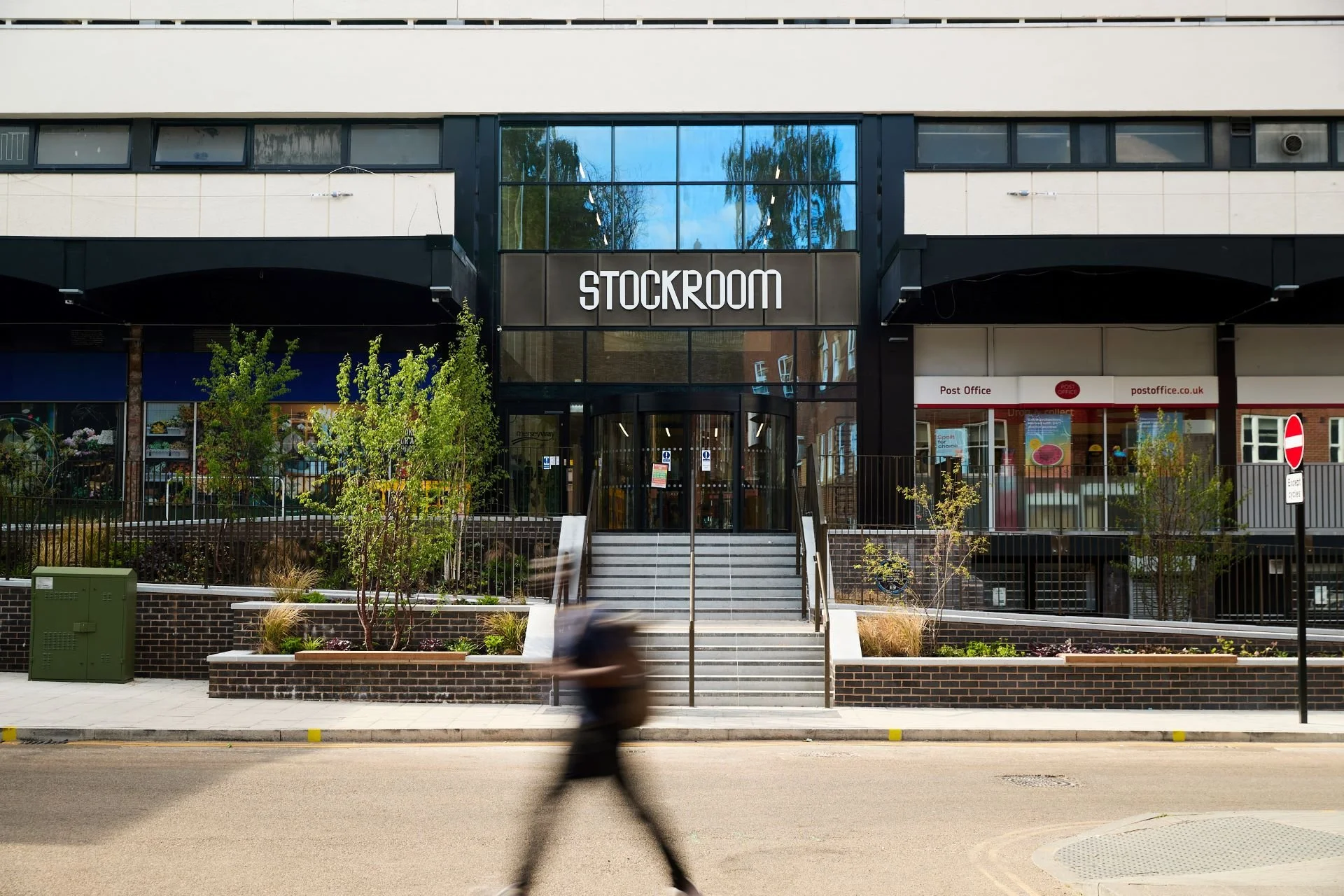
Stockroom in Greater Manchester demonstrates how existing town centre buildings can be repositioned to support new uses, increase activity and contribute to wider regeneration
Across the UK, town centres are being re-evaluated. Changing patterns of work, retail and public service delivery have left many buildings underused, yet their location, infrastructure and presence within the urban fabric remain highly valuable. Increasingly, the focus is shifting from replacement to reinvention.
As part of this ongoing conversation, SpaceInvader recently collaborated with Manchester Invest Partnership to share insights on radical reuse and town centre regeneration, highlighting the growing role existing buildings can play in shaping future places.
In Greater Manchester, this shift is gaining real momentum. Through a growing number of civic and commercial projects, radical reuse is emerging as a practical strategy for restoring activity, confidence and long-term value to town centres.
At the core of this approach is a recognition that most existing buildings already hold significant value. Their structure, materials and central locations offer a strong foundation for redevelopment. Rather than starting again, careful and considered intervention can unlock better performance while reducing environmental impact and programme risk.
“The future of town centres will not be defined by demolition, but by how intelligently we adapt the buildings already in place.”
This is particularly relevant in town centres, where underused buildings have a visible effect on confidence and activity. When prominent assets sit vacant or operate below capacity, the surrounding area often follows. Repositioning these buildings to reflect how people live and work today can quickly restore relevance and increase footfall.
Projects across Greater Manchester demonstrate how this can work in practice. In Oldham, the consolidation of a dispersed civic estate into a central hub has transformed how services are accessed, bringing greater visibility and activity back into the town centre. In Stockport, investment in civic and cultural assets has helped reinforce the role of the town centre as a destination, encouraging further development and inward investment.
These schemes highlight an important point. When reuse is delivered with clarity and purpose, it does more than improve a single building. It can act as a catalyst, shifting perception and creating confidence for wider regeneration.
Flexibility is a key part of this process. Buildings designed around a single, fixed use can quickly become obsolete as organisational needs change. By contrast, adaptable environments allow for a mix of uses to evolve over time. At the Renold Building in central Manchester, SpaceInvader’s work demonstrates how spaces can transition between coworking, events and private workspace without requiring structural change. This kind of adaptability not only supports occupiers but also protects long-term asset value.
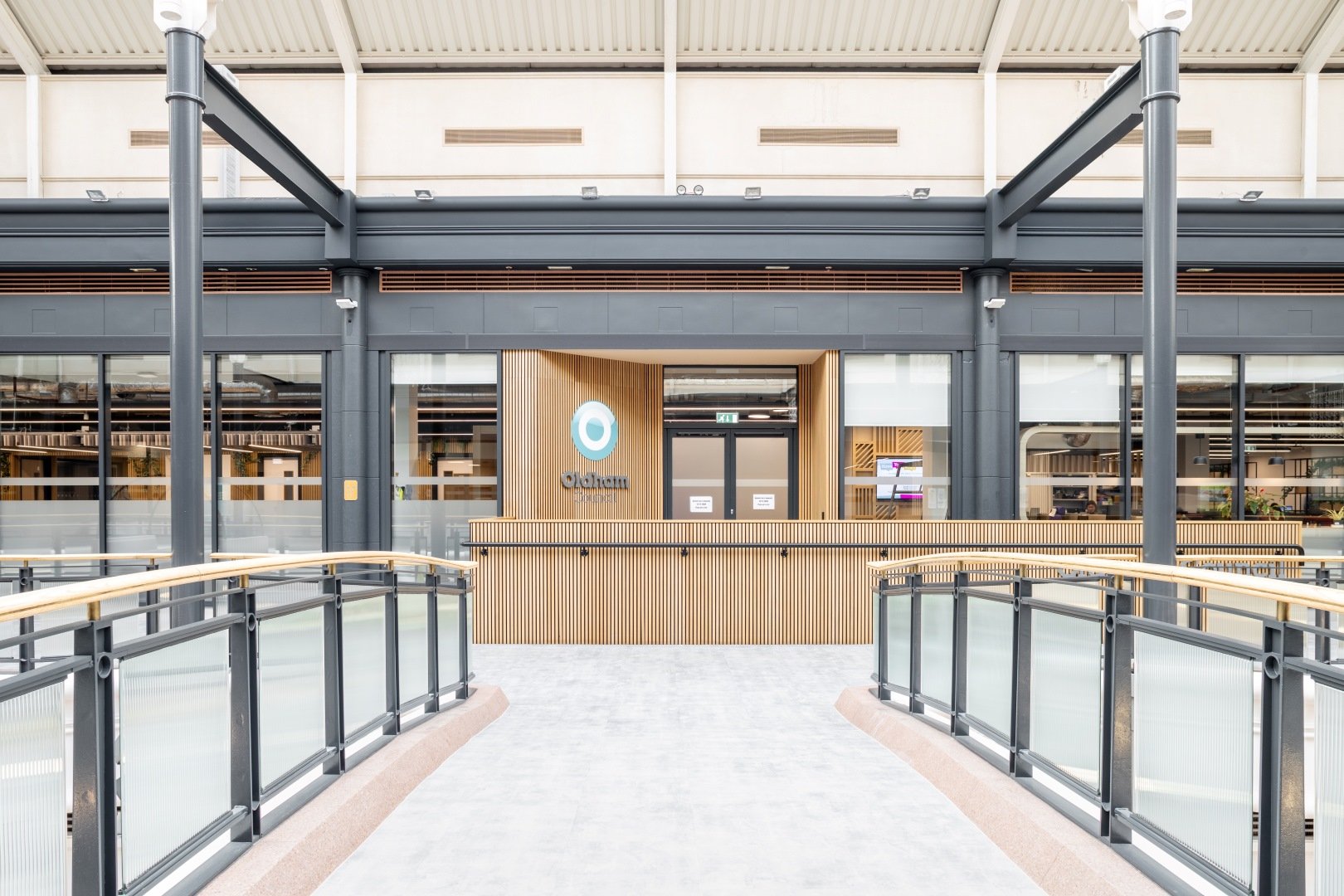
Oldham civic hub illustrates how existing town centre assets can be transformed into accessible, multi-use environments that support services, increase footfall and strengthen community engagement
However, retrofit and reuse are not without challenges. Existing buildings bring constraints, from structural grids and servicing routes to limited natural light and legacy systems. These factors require a more disciplined and collaborative design approach. Successful outcomes depend on early alignment between stakeholders, clear decision-making and a willingness to work within, rather than against, the building’s existing framework.
Collaboration plays a particularly important role in Greater Manchester, where there is a strong culture of partnership between local authorities, consultants and delivery teams. This has enabled more progressive approaches to funding, phasing and estate rationalisation, helping unlock projects that might otherwise be difficult to deliver.
Alongside performance and practicality, there is also an opportunity to retain and reinterpret the character of existing buildings. Radical reuse is not about applying superficial references to the past, but about understanding which elements hold value and integrating them into a contemporary design approach. Whether retaining original glazing, refurbishing existing materials or introducing clearly modern interventions, this balance helps maintain authenticity while supporting new uses.
As the built environment continues to evolve, the case for reuse is becoming increasingly clear. It offers a way to reduce embodied carbon, control costs and accelerate delivery, while also strengthening the social and economic role of buildings within their communities.
The challenge now is to shift perception. Too often, demolition is still seen as the default, with retrofit considered a secondary option. In reality, the most effective starting point is to ask what an existing building can become.
Across Greater Manchester and beyond, that mindset is beginning to take hold. As more projects demonstrate the value of radical reuse, it is becoming a central part of how town centres are reimagined for the future.
For the full feature in collaboration with Manchester Invest Partnership, you can read the original article here.